The Photograph
By Madelaine Zadik
Standing on my tippy toes, I try to get myself high enough to see the framed photographs on top of my mother’s gray wooden dresser, but I can’t quite make it.
“Mommy, who’s that?” I ask, pointing up at the faces.
My mother takes down three photos, and we sit on the bed. The first one, in that old sepia tone, is adorned with a brass frame. The white mat surrounding a smiling face is embossed with a flower that goes along the length of the image.
“This is my mother, your grandmother. She died when I was just thirteen, but she was a wonderful mother.”
The next photo of an older woman is black and white in a simple black wooden frame.
“This is Tante Klara, my mother’s sister, my aunt. She came to live with us after my mother died.”
The last one is a colorized black and white photo, also in a simple black frame. The colors are muted. I stare at the photograph as the young woman’s dark eyes stare directly back at me. She has dark hair that is parted in the middle and comes just below her ears, her lips are tinged red, and there is a slight blush in her cheeks. She’s wearing a blue blouse and a silver necklace with a small oval pendant.
“And this is Helga, my sister. She was two years younger than me. In this picture, she was sixteen.”
I desperately try to remember the exact words of that conversation and everything my mother said. Although I have vivid memories of those photographs sitting high atop that chest of drawers, my memory is much vaguer when it comes to that precise moment when, for the first time, I heard my mother utter Helga’s name and tell me about her sister. There are many similar things that, much as I try, I am unable to retrieve from the depths of my subconscious.
Nevertheless, it feels like I always knew about Helga, just as if she had been sitting with us at the dining room table every night. Mom filled me with endless stories about her sister and their idyllic childhood in Breslau, Germany—their doting parents, their adventurous country outings in the family car, and the fun costume parties. Their mother even had an aviary in one room of their enormous apartment, which was large enough for the sisters to ride their bicycles through the long hallway from their parents’ bedroom at one end of the apartment to the children’s room at the other. Helga and my mother performed gymnastics on chin-up bars in that hallway. They fought each other with toothbrushes. They gave names to bottles that they lined up on windowsills and created personalities for them as if they were dolls. My mother described Helga as mischievous and oh so stubborn. And, of course, there is that scene of the two of them as teenagers, giggling as they stared out the apartment window, flowerpots perched on the sill in front of them, while they nonchalantly dropped some of the soil from the pots onto the heads of the Gestapo marching in the street below.
How and when I first learned about what happened to Helga and why she was not sitting at the dinner table with us, is another one of those memories I can’t quite recall, but I don’t think there was one big moment. I picked up little bits of the story here and there and fit them together like a 1000-piece jigsaw puzzle where you can make out the large image despite many missing pieces.
Years later, when I am in my twenties, I will learn the art of framing and I will cut a beveled mat and carefully place that image of Helga in a beautiful wooden frame with a gold-gilded edge. I will hang it on the wall in an apartment my parents recently moved into. By this time, I will understand that Helga deserves a place of honor in our family, as a resister and idealist.
My mother recounted how she and Helga had been couriers as teenagers. Taking a stand against Hitler, they smuggled illegal newspapers in their ski poles across the border from Czechoslovakia into Germany through the Sudeten Mountains. They collected money for the families of political prisoners. The sisters were caught, arrested, and charged with high treason. They had little solid evidence against my mother, and she managed to get acquitted and escape Germany just in the nick of time. Helga, however, was convicted and served a three-and-a-half-year sentence, but they never released her from custody. Instead, they shipped her directly to the Ravensbrück Women’s Concentration Camp. However, our family rarely discussed the details of how the Nazis had extinguished Helga’s life. We spoke of her death without ever using the word murder.
Now decades later, that photograph of Helga hangs on my bedroom wall. I carry her legacy with me and remember Helga as an activist, a determined young woman who believed she could make a difference. As I look into Helga’s eyes frozen in time, she inspires me to speak up, to take action, and to resist.
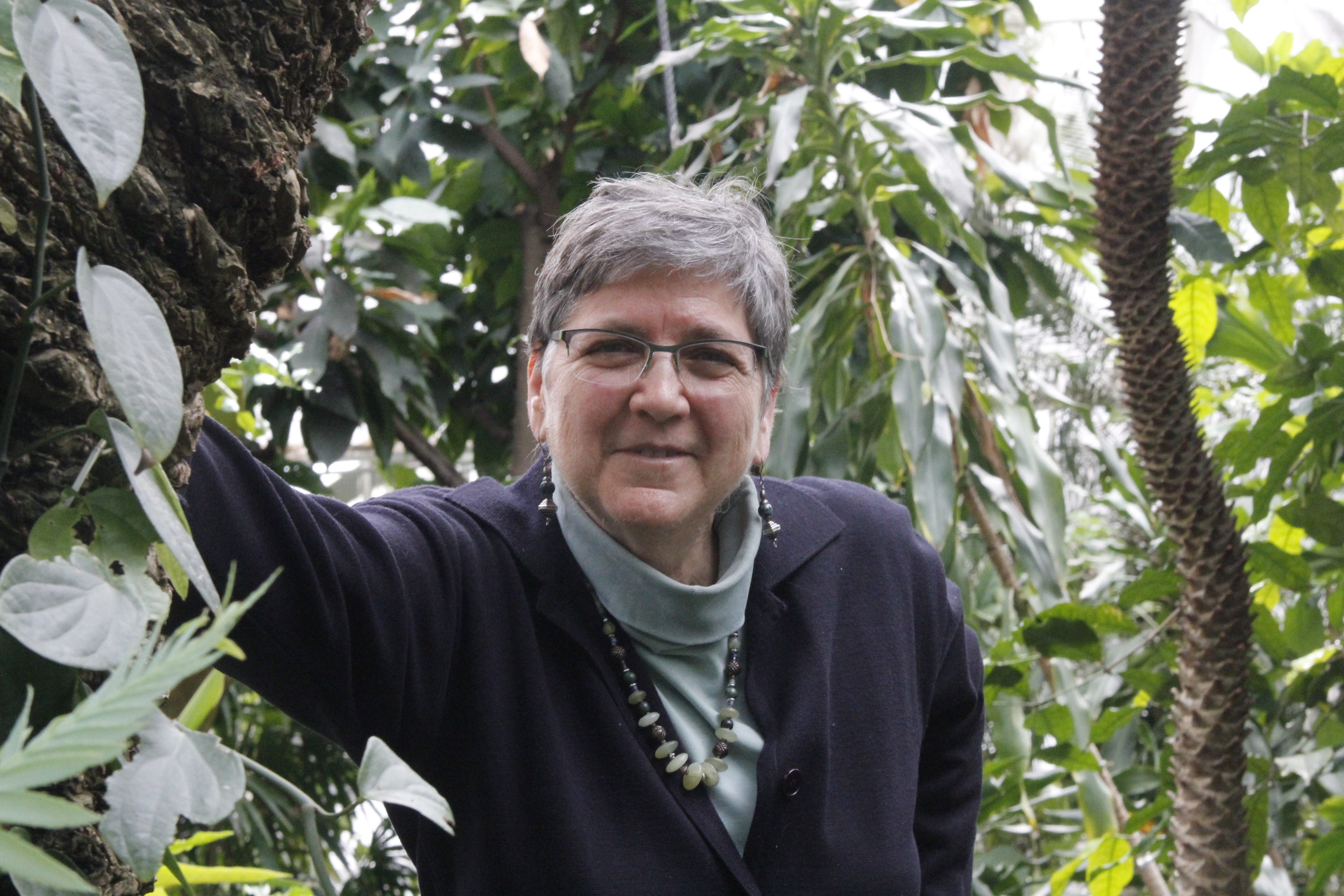
Madelaine Zadik lives in rural western Massachusetts along the Connecticut River. She is currently at work on a memoir about her relationship with her Aunt Helga, whom she never knew except through letters Helga wrote from prison in Nazi Germany. Her work has been featured on New England Public Media; has been nominated for a Pushcart Prize; and has appeared in The Sun, Consequence, Mud Season Review, The Write Launch, Still Point Arts Quarterly, Zone 3, and elsewhere. Find her online at madelainezadik.com.